
Knowledge Centre — Pillar 3
Trackdays and Club Racing: The Gear Guide
From your first novice trackday to club racing under a race licence, the gear requirements and the questions that come with them change at every stage. This guide covers what to wear, how organisers and circuits compare, and what actually happens if things go wrong.
A first trackday and a full club racing season ask for genuinely different levels of gear, and it's easy to either under-prepare for your first session or over-spend before you know whether you'll stick with it. This guide is built around that progression: what you actually need to turn up to a novice trackday safely and legally, how the major UK, EU and US trackday organisers differ, and what changes once you're racing under a licence rather than riding for fun.
Every reputable trackday organiser has a minimum gear requirement, and it's worth checking the specifics before you book rather than assuming one operator's rules match another's — requirements can differ on armour levels, back protector requirements, and whether one-piece leathers are mandatory above certain groups or speeds. Club and national racing adds a further layer: most series require CE-certified leathers meeting a minimum standard, and some series-specific homologation rules go further than the general CE requirement.
The guides below go deep on each stage of that journey — your first trackday checklist, how organisers compare across regions, series-specific suit rules, and the practical realities of crashing and getting back on track.
Trackday vs Racing: What Actually Changes
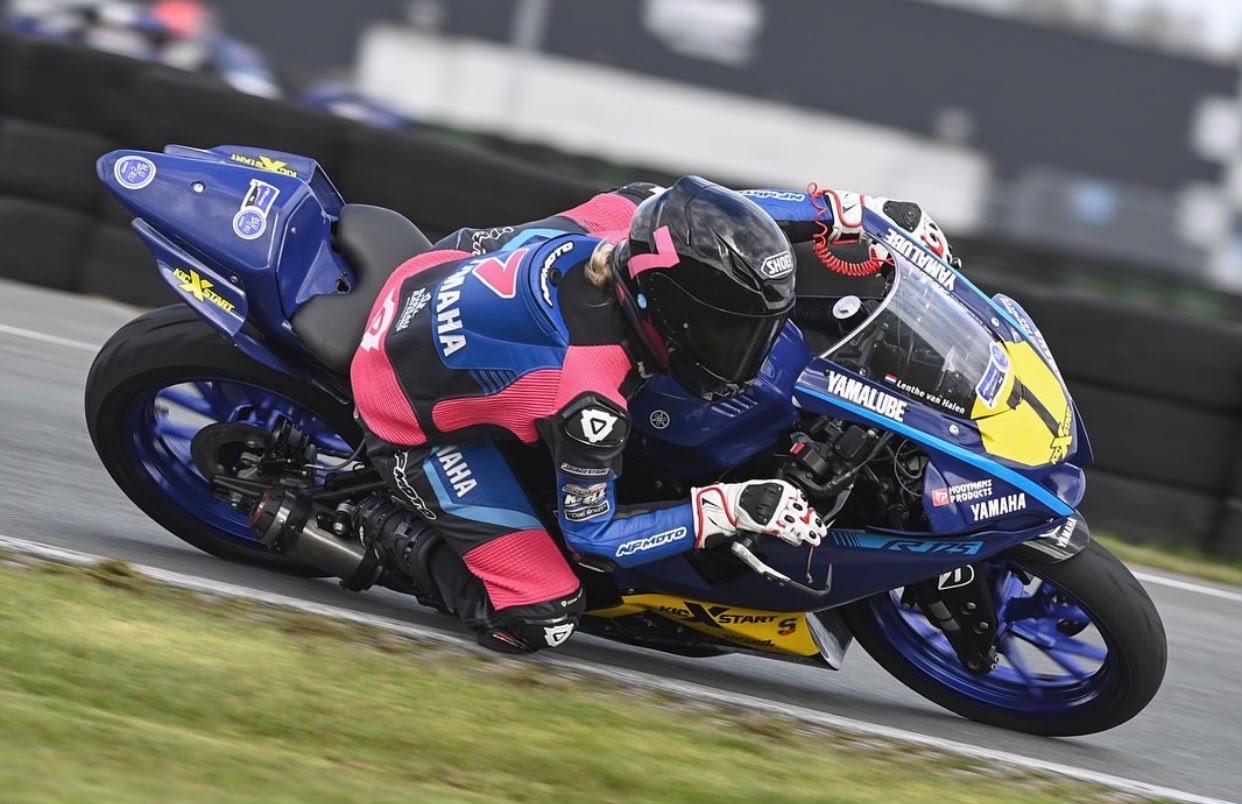
A novice trackday typically asks for CE-certified leathers (or textile gear with equivalent CE armour, depending on the organiser), a suitable helmet, and back protection — the baseline most riders already own if they've bought decent road gear. Intermediate and advanced groups usually step this up to a mandatory one-piece leather suit and often a back protector rated to a specific standard, since higher group speeds mean a genuine increase in risk if something goes wrong.
Club and national racing goes further again: a race licence from the relevant governing body, scrutineering of your gear before you're allowed on track, and in many series specific homologation requirements for the suit itself, not just a general CE mark. These requirements vary meaningfully between series and change from season to season, so always confirm current requirements directly with your specific series before assuming last year's rules still apply.
UK Trackday Organisers
The UK has a genuinely mature trackday scene with several established operators running events across the country's major circuits. No Limits Trackdays is one of the longest-running and largest UK operators, running events across a wide range of circuits including Brands Hatch and Donington Park. MSV Trackdays (MSVT) is the in-house trackday division of MotorSport Vision, running events across all six MSV-owned circuits — Brands Hatch, Donington Park, Oulton Park, Snetterton, Cadwell Park and Bedford Autodrome.
Each organiser sets its own gear requirements, group structure, and booking process, so it's worth checking directly with whichever operator you're booking with rather than assuming requirements are identical across the board. Full comparison in our dedicated UK organisers guide below.
Riding Further Afield: EU and US Trackdays
A growing number of UK riders travel to European circuits for a change of tarmac and scenery — often organised as part of a tour package with a UK-based operator, sometimes booked independently through a local circuit or organiser. Requirements vary by country and circuit, so it's worth confirming gear rules and any local licensing requirements well ahead of travelling, not on arrival.
The US trackday scene runs through its own set of established organisers with their own group structures and gear requirements, generally built around the same CE or equivalent certification principle as the UK, but again worth confirming directly rather than assuming UK requirements transfer exactly.
Moving From Trackdays to Racing
Plenty of riders spend years doing trackdays without ever racing, and that's a completely valid way to enjoy the sport. For those who do want to progress into club racing, the UK pathway runs through the Auto-Cycle Union (ACU), the sport's governing body: joining an ACU-affiliated race club — clubs like Bemsee, the world's oldest motorcycle racing club, run regular race meetings at UK circuits — completing a Competitor Training Course and Basic Rider Assessment, and starting out with a Novice licence (identifiable by the orange vest) before progressing through the licence grades. ACU Road Racing Standing Regulations require a complete one-piece leather suit of at least 1.2mm thickness on all parts — NFmoto's standard 1.3mm cowhide build already exceeds this. International series each run their own equivalent licensing structure. Whichever route you're on, confirming your specific series' current gear and scrutineering requirements directly against the official handbook, well before your first race entry, avoids an unpleasant surprise at the track.
Building a Suit for Track or Race Use
Whether you need your first CE-certified leathers or a series-specific homologated race suit, see how NFmoto's made-to-measure process gets your fit and certification right from the start.
Custom Race Suits Guide →Your First Trackday: The Complete UK Gear Checklist
Everything you actually need before your first session, and what can wait.
UKEvery Major UK Trackday Organiser Compared
No Limits, MSV, Focused, Bemsee and more — how they differ.
EUThe EU Trackday Tour: 12 Circuits Worth Flying To
Where UK riders go for a change of scenery and different tarmac.
USTop US Trackday Organisers Compared
N2, YCRS, Sportbike Track Time, STT and how they differ.
DesignBSB-Inspired Suit Designs
How riders design an original, race-style livery.
HomologationMotoAmerica Homologation Rules for Suits, Explained
What US club and national racing actually requires.
AftercareWhat Happens After a Crash
Repairing your suit, reporting to your airbag brand, getting back on track.
ConditionsRiding Trackdays in the Wet: What Suit and Setup
Adjusting your gear and approach when the track's not dry.
Trackday & Racing: Common Questions
What's the minimum gear I need for my first trackday?
Do all UK trackday organisers have the same gear requirements?
Is club racing gear different from trackday gear?
What happens to my suit if I crash?
Is crash damage covered by NFmoto's warranty?
Can I get a BSB-style replica suit design?
Do I need a different suit for wet trackdays?
Are US and EU trackday requirements the same as the UK?
How do I know if my suit meets my racing series' homologation rules?
Can NFmoto build a suit to a specific series' current homologation spec?
Racing or Doing Regular Trackdays?
Talk to us about a suit built for your series or organiser's current requirements.